A Simple Idea — High Efficiency
Roots-Type Two-Rotor Vacuum Pump: A Simple Kinematic Solution for Efficient Gas Flow Control
A Roots-type two-rotor vacuum pump is a clear example of how a simple kinematic design can provide highly efficient gas flow management. The pump takes its name from its inventors — brothers Philander and Francis Roots, who developed the original rotary blower in the 19th century. The device was initially designed for blast furnaces and air supply applications. Due to the versatility of its design, the rotary blower became an important component of modern vacuum technology. Roots vacuum pumps are highly valued for their high pumping speed and stable operation within the required vacuum range. Their oil-free design and ability to handle contaminated gas streams make them particularly suitable for clean manufacturing processes and applications involving solid particles.
-
Operating Principle
The core element of a Roots vacuum pump is a pair of specially shaped rotors rotating synchronously (most commonly with two or three lobes). The rotors are installed inside a sealed oval-shaped housing and rotate in opposite directions with minimal clearance, without contacting each other or the housing walls. This provides a non-contact, dry (oil-free) operating mode. Due to this design, Roots pumps can operate at high rotational speeds (up to several thousand rpm) and transport large gas volumes without internal friction or contamination of the pumped medium. A key feature of the Roots pump is the absence of internal compression. Pressure increase occurs only when the transported gas connects with the discharge port. This distinguishes Roots pumps from rotary vane and screw vacuum pumps. In most applications, a Roots pump operates as a booster stage within a multi-stage vacuum system. In multi-stage vacuum installations, Roots pumps often serve as an intermediate stage between atmospheric pressure and high-vacuum equipment.
-
Advantages of Roots Pump Technology
■ High pumping speed and high throughput
■ Reliable and simple mechanical design
■ Low wear due to non-contact rotor operation
■ No oil contamination of the vacuum environment
■ Fast achievement of operating vacuum conditions
■ Ability to handle large gas volumes
■ High efficiency in the medium vacuum range
■ Long service life
Technical Features and Limitations. Despite their efficiency and technological advantages, Roots pumps have several operational characteristics.
Pulsating Gas Flow. The gas flow through a Roots pump has a pulsating nature due to the periodic changes in working chamber volume. As each chamber fills and transfers gas, the flow rate changes slightly over time. This can cause pressure fluctuations and, at high rotational speeds, additional noise and vibration within the vacuum system.
Sensitivity to Pressure Difference. When operating with a large pressure difference between the inlet and outlet, the load on the rotor lobes increases significantly. This can lead to rotor overheating. In industrial Roots pumps, a bypass valve is commonly installed to protect the rotors and reduce thermal stress.
Requirement for a Backing Vacuum Stage. A standard Roots pump cannot directly evacuate a system from atmospheric pressure to high vacuum without preliminary pumping. For complete vacuum operation, it is typically combined with a backing pump, such as: rotary vane vacuum pumps; dry screw vacuum pumps. The backing pump reduces the pressure to a level where the Roots booster stage operates efficiently.
Heat Generation During Operation. Due to the absence of internal cooling and intensive gas flow compression effects, Roots pumps may experience noticeable heating during continuous operation. Industrial versions often include: air cooling; gas cooling; bypass circulation systems.ч
-
Applications of Roots Vacuum Pumps
Roots pumps are valued for their high pumping speed and stable operation within the required vacuum range. Due to their combination of high throughput, reliability, and clean operation, Roots pumps occupy an important position in modern industrial and scientific vacuum systems. Typical Applications Include:
Industrial Vacuum Systems
Used in: vacuum drying systems; vacuum packaging equipment; medium vacuum technological processes (from several mbar to hundreds of mbar).
Examples include: food industry drying systems; chemical processing equipment; packaging machines; gas evacuation systems for furnaces and moderate vacuum installations.
Plastics Manufacturing: Roots pumps are used in the production of: polyethylene products; polypropylene products; other polymer materials.
They are applied in extrusion and forming lines where rapid creation of medium vacuum is required, including: air removal from molds; polymer degassing; moisture removal from materials.
Metallurgy and Material Processing. Applications include: vacuum hardening; metal alloying processes; steel nitriding; vacuum carburizing; electron beam welding; plasma welding; vacuum coating processes. Roots pumps are used to create vacuum conditions in thermal processing furnaces and welding chambers where high pumping speed at medium pressure levels is required.
Scientific and Laboratory Equipment. Used in: distillation systems; filtration equipment; leak detection systems; vacuum research installations.
Laboratories value Roots pumps for their ability to rapidly evacuate large volumes of gas to medium vacuum levels, for example when preparing: test chambers; vacuum presses; experimental vacuum systems.
-
Technical Specifications
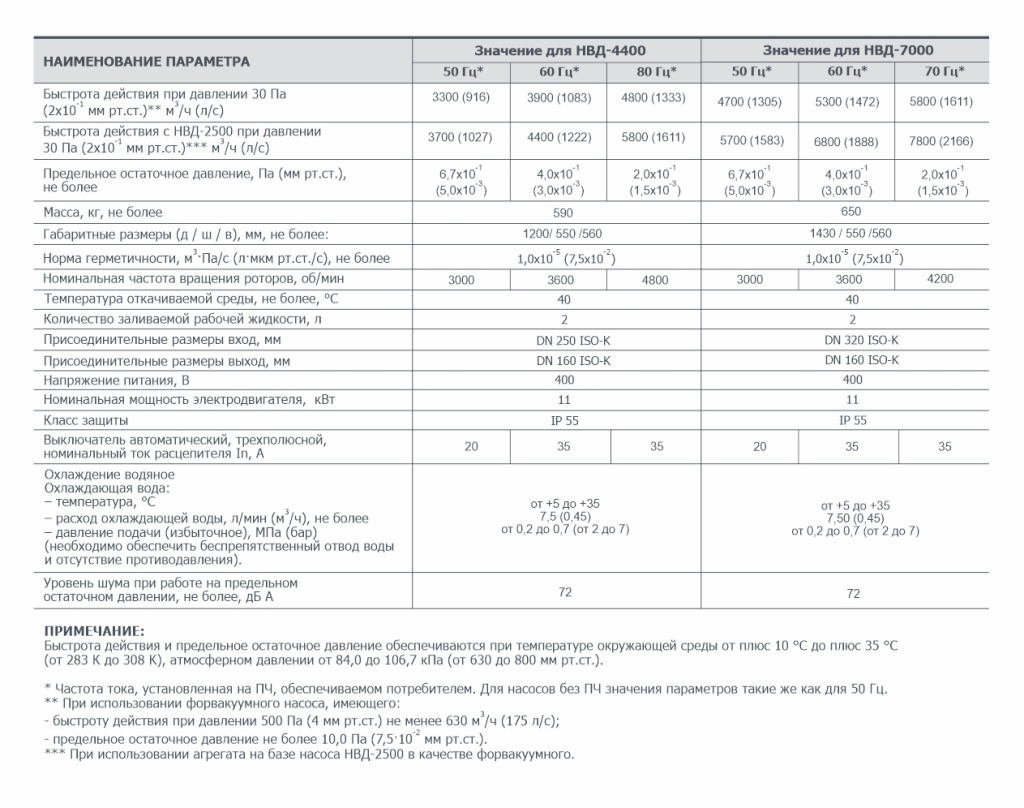
JSC “Vacuummash” manufactures serial Roots-type two-rotor vacuum pumps: NVD-200, NVD-600. The company is also launching production of new models: NVD-4400, NVD-7000 with pumping speeds up to: 5800 m³/h
-
Purchase Roots-Type Two-Rotor Vacuum Pumps NVD-4400 and NVD-7000
The Roots-type two-rotor vacuum pump demonstrates how a simple kinematic concept can provide highly efficient gas flow control. The absence of internal compression, precise rotor synchronization, and high pumping speed make Roots pumps an essential component of modern vacuum systems — from industrial manufacturing processes to advanced scientific research. The combination of clean operation, reliability, and high performance ensures that Roots vacuum pumps remain one of the most effective solutions for medium and high-throughput vacuum applications.
➜ CONTACT OUR SPECIALISTS for selecting vacuum equipment at the manufacturer’s price
➜ VACUUM EQUIPMENT CATALOG is available on the official VACMA.RU website
+7 (843) 278-35-27 kazan@vacma.ru JSC Vacuummash (Vacma) plant: 58 Tulskaya St., Kazan, 420054, Russian Federation